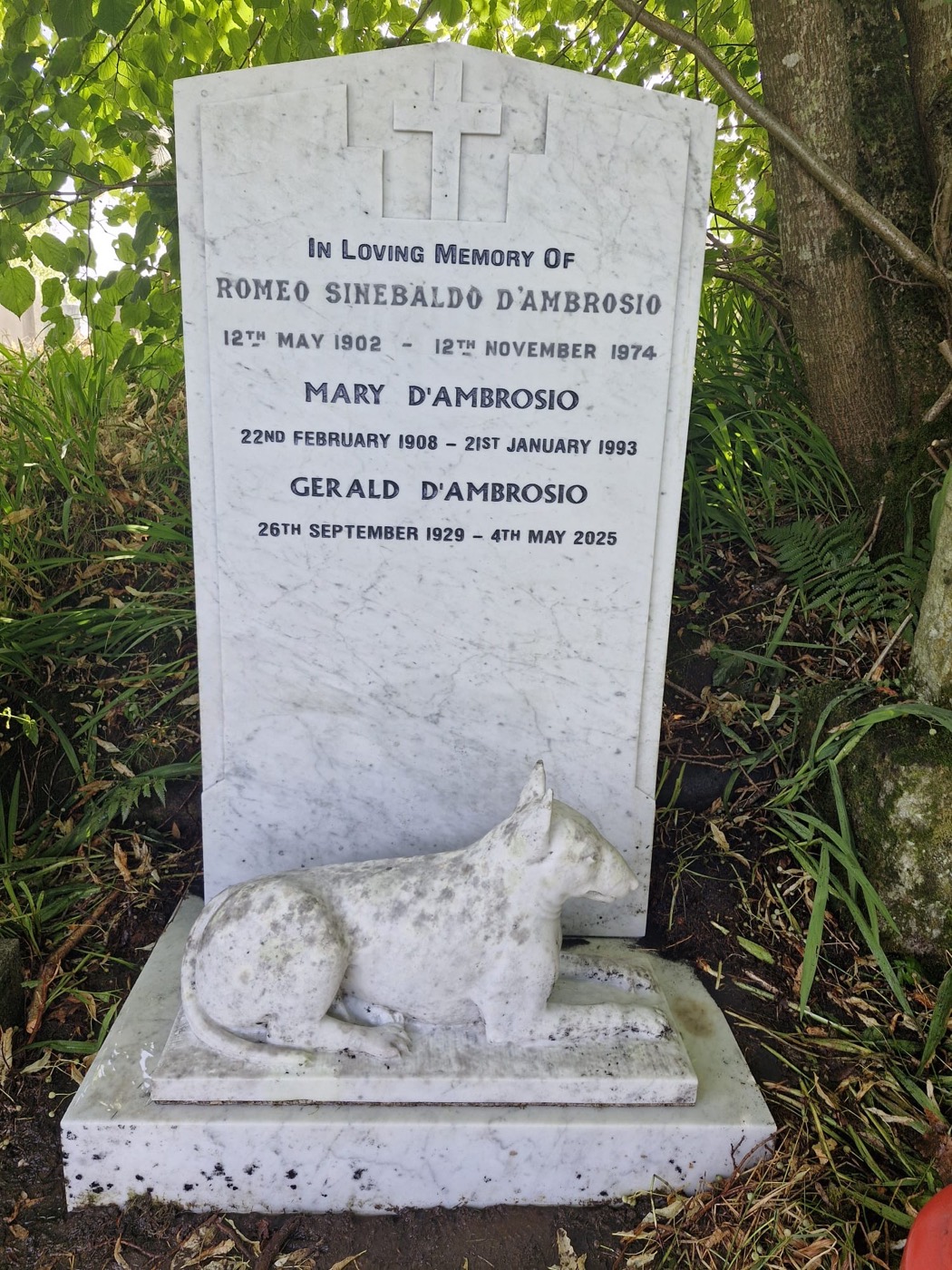
If your family's headstone has been laid flat, it is most likely because the council tested it for stability and judged it unsafe to stand. This is routine safety work, not a judgement on the family. In most cases the stone can be re-fixed upright on a proper foundation by a memorial mason, with a permit from the council.
Why do councils test headstones?
A headstone is a heavy piece of stone, and over the years the ground beneath it can settle, foundations can weaken and fixings can fail. A stone that looks solid can sometimes move more than it should. Councils have a responsibility for safety in their cemeteries, so they carry out regular inspections of memorials to check that they are stable.
Inspections usually involve a visual check and a careful test to see whether a stone moves when pressure is applied. The methods, and how often the checks are carried out, vary from council to council.
Why has my family's headstone been laid flat?
If a stone is judged unsafe, the council will usually take action to make it safe. That might mean:
- laying the stone flat on the grave, face up where possible;
- staking it, with a temporary support to hold it upright;
- cordoning it off, with tape or a notice to keep people back;
- attaching a notice asking the lair holder to get in touch.
Finding a family stone lying on the grass can be upsetting, particularly if you weren't expecting it. Please be reassured that it is not a comment on how the grave has been cared for. Very often the stone was simply set many decades ago, before modern fixing methods, and time has done the rest. Many well kept stones in Glasgow's cemeteries have been laid flat for exactly this reason.
Laying a stone flat is not the same as removing it. In most cases, the stone is still on the grave and can be put back up properly.
What should I do if a headstone has been laid flat?
There's no need to rush, and no need to try to lift the stone yourself. A headstone can be very heavy, and it is safest left where it is until it can be re-fixed. The usual steps are:
- Contact the council's bereavement services. They can tell you why the stone was laid flat, whether any other work is needed, and what they require before it can be re-fixed.
- Confirm who holds the lair. Only the lair holder, or someone with their authority, can authorise work on the memorial. If the lair holder has died, the right of burial may need to be transferred first. Our guide to lair certificates and burial rights explains how that works.
- Ask a memorial mason to re-fix the stone. The mason will look at the stone and the ground, and explain what's needed to make it secure.
- The mason applies for a permit. Re-fixing a memorial is work that needs council approval, just like a new headstone.
If you're not sure which council runs the cemetery, tell us the cemetery name or even just the area, and we can tell you.
How is a headstone re-fixed properly?
Standing a stone back up isn't enough on its own. For it to stay upright, it needs to be fixed securely to a sound foundation, to current industry and council standards. The details depend on the stone, the ground and the council's rules, but the work generally involves:
- Checking the foundation. If the old base has sunk or broken, a new foundation may be needed.
- Fixing the stone to its base. This is usually done with metal dowels or pins set into the stone and the base, so the two can't simply separate.
- Anchoring into the ground where the council requires it, using a ground anchor or similar fixing below the surface.
- Levelling, so the stone stands straight and the weight is evenly spread.
When we re-fix a stone, we build it to pass future stability inspections, so the family shouldn't have to go through this again. Our guide to cemetery rules around Glasgow explains more about why councils set these standards.
What about a stone that is leaning but hasn't been laid flat?
A leaning headstone is often the first sign that a foundation is weakening. If you notice a family stone starting to tilt, it is well worth having it looked at before an inspection finds it. Re-fixing a stone at this stage is usually simpler, and it means the family decides when the work is done, rather than finding the stone laid down.
Can the stone be cleaned or re-lettered at the same time?
Yes, and many families choose to. While the stone is being re-fixed, it is a natural time to:
- clean it, removing dirt, moss and lichen from the surface;
- refresh the lettering, re-gilding or re-painting letters that have faded;
- add a name, if another family member's name is to be included.
Doing the work together means one visit and one permit application where the council allows it. You can see examples of our work on the restoration page, and our guide to how to clean a headstone explains what's safe to do yourself between visits.
How can I stop it happening again?
A stone that has been properly re-fixed should stay secure for many years. Even so, some families like the peace of mind of having someone keep an eye on it. We offer service and maintenance contracts, which cover regular checks and care of the memorial, and we can also arrange insurance for it. You can read more in the maintenance section of our restoration page.
It is also worth making sure the council has up to date contact details for the lair holder. That way, if anything is ever found during an inspection, the family hears about it first.
Talk to us
If a family headstone has been laid flat, or you've noticed one starting to lean, we're glad to help. We'll look at the stone, explain what it needs in plain terms, and handle the council permit for you. Call us on 0141 762 3733, send us a message, or visit our display yard at 5 Crosshill Road, Bishopbriggs, G64 2PZ. No appointment is needed.
Questions families often ask
Will the council tell me before laying a stone flat?
Practice varies. Some councils write to the lair holder or leave a notice, but only if they hold up to date contact details, so it is worth keeping those current.
Can a broken headstone be repaired?
Often, yes, depending on the break and the stone. We will look at it and explain honestly whether repair or a new memorial makes more sense.
Is it safe to lift a headstone myself?
No. Headstones are very heavy and can cause serious injury. Please leave it where it is until a mason can re-fix it.
Does re-fixing a stone damage the lettering?
It should not. We handle the stone carefully and can refresh faded lettering while the work is being done.
Written by Charles Lipton, third-generation memorial mason with forty years in the trade. The Lipton family has made and cared for memorials across Glasgow since 1927. Read our story.