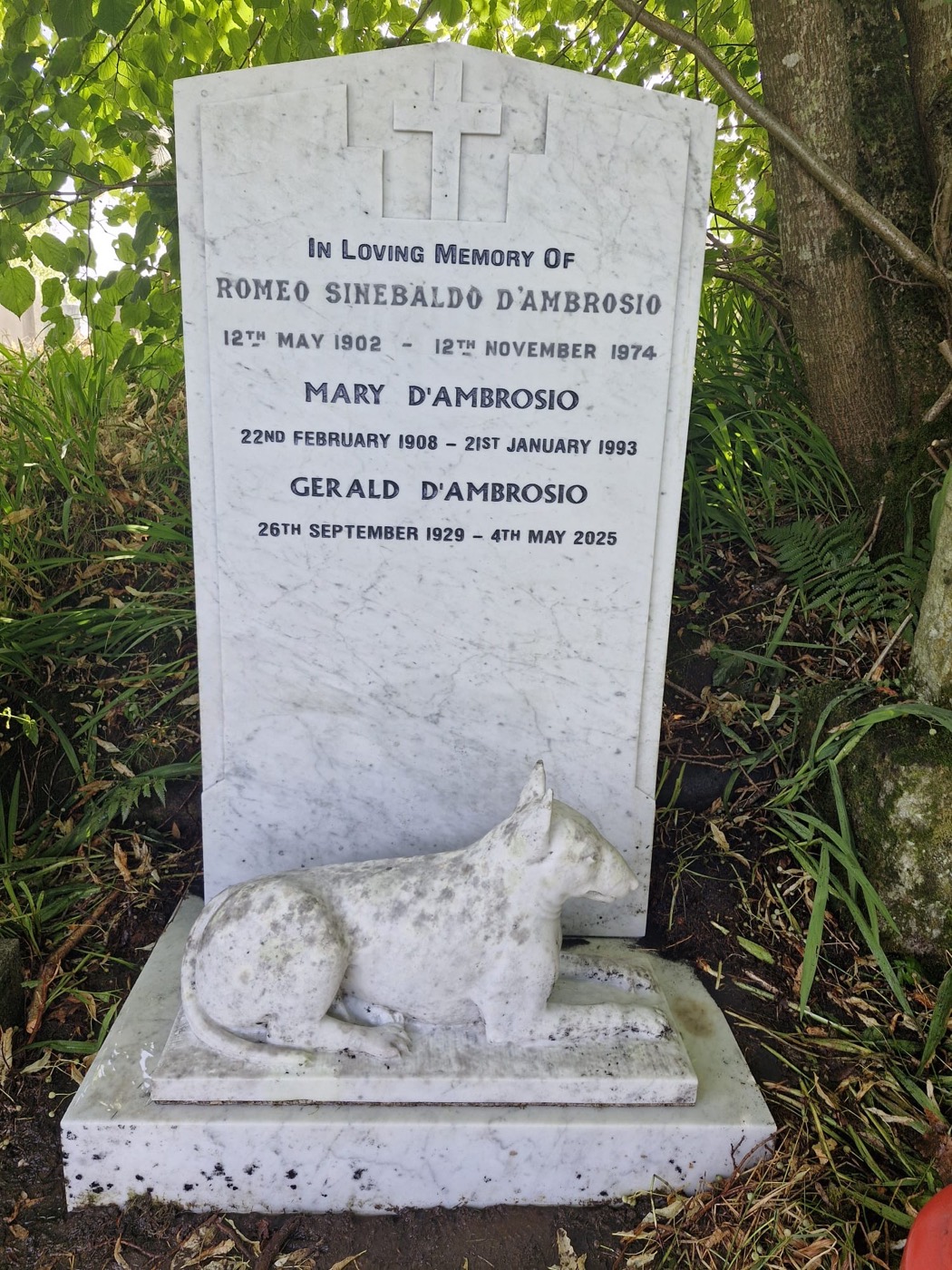
To clean a headstone safely, use a soft brush, plenty of clean water and, for granite, a little mild non-ionic soap, then rinse well. Never use bleach, wire brushes, pressure washers or household cleaners, and take particular care with marble and sandstone. If the lettering has faded, the stone is leaning or you can see cracks, that is the time to call a mason.
What you need to clean a headstone
You do not need anything special. Gentle cleaning done regularly does more good than a hard scrub once in a long while.
- A soft brush. A soft nylon brush or a natural bristle brush is ideal. A soft toothbrush helps around lettering and carving.
- Clean water. Take more than you think you will need; two or three containers is sensible, as not every cemetery has a tap nearby.
- A mild non-ionic soap, for granite only. A small amount in a bucket of water is plenty. Non-ionic stone cleaners are easy to find; if in doubt, plain water alone is always safe.
- Soft cloths or sponges for wiping and drying.
- A plastic scraper or wooden lolly stick, for lifting moss gently off the base.
How to clean a granite headstone, step by step
Polished granite is hard and forgiving, which is one reason it is the usual choice in Scotland. Most granite headstones clean up well with a little patience.
- Look first. Before you touch the stone, check it is steady. If it moves when you press gently, stop, and read the section on leaning stones below.
- Wet the stone. Soak the surface with clean water. A wet stone cleans more easily and is less likely to be scratched by grit.
- Brush gently. Using your soft brush and a little soapy water, work from the bottom upwards in small circles. Working upwards stops dirty streaks running down over the parts you have not yet cleaned.
- Go round the lettering. Brush beside the letters rather than across them, especially if they are gilded or painted.
- Rinse thoroughly. Rinse from the top down with plenty of clean water, so no soap is left on the stone.
- Dry and polish. A soft cloth brings back the shine on polished granite and helps prevent water marks.
That is all most stones need. A clean every few months keeps a granite headstone looking cared for.
What should you never use on a headstone?
Well-meant cleaning can do lasting harm. Please avoid all of the following.
- Bleach. It can stain stone, damage lettering and harm the plants around the grave.
- Wire brushes, scouring pads or abrasive powders. These scratch polished granite and wear away softer stone.
- Pressure washers. They can blast out the joints, strip lettering and cut into the surface of softer stone. They look quick but are not worth the risk.
- Household cleaners. Kitchen and bathroom sprays often contain acids, bleach or other chemicals that are not meant for stone.
- Anything acidic, including vinegar and lemon juice. Acid is especially damaging to marble and sandstone, which can be etched or dissolved.
Please also do not scrub gilded or painted lettering. Gilding is a fine layer of gold leaf and it can be lifted by a brush. If the lettering needs refreshing, that is a job for a mason.
Cleaning marble and sandstone headstones
Many older family stones in Glasgow's cemeteries are marble or sandstone. Both are much softer than granite and need a lighter touch.
Use clean water only, with no soap, and the softest brush you have. Do not scrub hard, and stop if you see grains of stone or flakes coming away on the brush. Sandstone in particular can be fragile after many years of weather. Marble can look grey or streaked with age; this is usually weathering of the stone itself rather than surface dirt, and it will not come off with cleaning. If an older stone needs more than a gentle wash, we would always rather look at it with you first.
What about lichen and moss?
Moss on the base and in the corners can usually be lifted away gently with a plastic scraper or wooden stick after the stone has been wetted. Take your time; soaked moss comes away more easily.
Lichen is harder. It grows slowly into the surface, and scraping it off by force can take the face of the stone with it, especially on sandstone and marble. On granite, patient soaking and soft brushing over several visits will often shift it. On softer stone, it is usually kindest to leave lichen alone, or to ask a mason for advice.
Do you need permission to clean a headstone?
Gentle cleaning by the family is not usually something that needs a permit. If you are not the lair holder, it is courteous to let them know, and if you are unsure, the council's bereavement services can tell you the rules for that cemetery.
Repairs are different. Re-fixing a stone, re-levelling it or adding lettering needs a permit from the council, applied for with the lair holder's agreement. We handle that application for you. If you are not sure who holds the lair, our guide to lair certificates in Scotland explains how to find out.
When should you call a mason?
Some things are beyond a bucket and brush, and trying to fix them yourself can make them worse. Please call us if you notice:
- Faded or missing lettering. Gilt and silver lettering can be restored by hand so the inscription reads clearly again.
- Stains that will not shift. Rust, tree sap and some other marks need the right treatment for the stone.
- A leaning or loose stone. Councils test memorials for stability and may lay an unsafe stone flat. A stone can often be re-erected and levelled. There is more on this in what to do if a headstone has been laid flat.
- Cracks or chips. These can let water in and get worse over winter.
- Marble or sandstone that is weathering badly, with flaking, crumbling or lettering that is disappearing.
We clean, restore, re-letter, re-erect and level memorials across Glasgow and the surrounding areas. You can see examples, including before and after photographs, on our restoration page.
Headstone cleaning and maintenance in Glasgow
Not every family lives close enough to visit often, and not everyone is able to kneel and scrub. If that is the case, we offer service and maintenance contracts, so the stone is looked after regularly without you needing to arrange it each time. We can also arrange insurance for the memorial.
If you would like us to look at a family stone, call us on 0141 762 3733, or visit our display yard at 5 Crosshill Road, Bishopbriggs, Glasgow G64 2PZ. No appointment is needed. If you know the cemetery and roughly where the grave is, that is plenty to start with, and we are glad to help.
Questions families often ask
How often should a headstone be cleaned?
A gentle clean every few months is plenty for most granite headstones. Softer stones such as marble and sandstone are best cleaned less often and more lightly.
Can I use washing-up liquid on a headstone?
Many washing-up liquids contain additives that are not meant for stone, so we suggest a mild non-ionic cleaner instead. If in doubt, clean water and a soft brush are always safe.
Can you clean a headstone for us if we live far away?
Yes. We clean and restore memorials across Glasgow and the surrounding areas, and our maintenance contracts mean the stone is looked after regularly without you needing to arrange it.
Will cleaning bring back faded gold lettering?
No. Cleaning removes dirt, but faded gilding needs to be re-gilded by hand. We can restore gilt and silver lettering so it reads clearly again.
Written by Charles Lipton, third-generation memorial mason with forty years in the trade. The Lipton family has made and cared for memorials across Glasgow since 1927. Read our story.