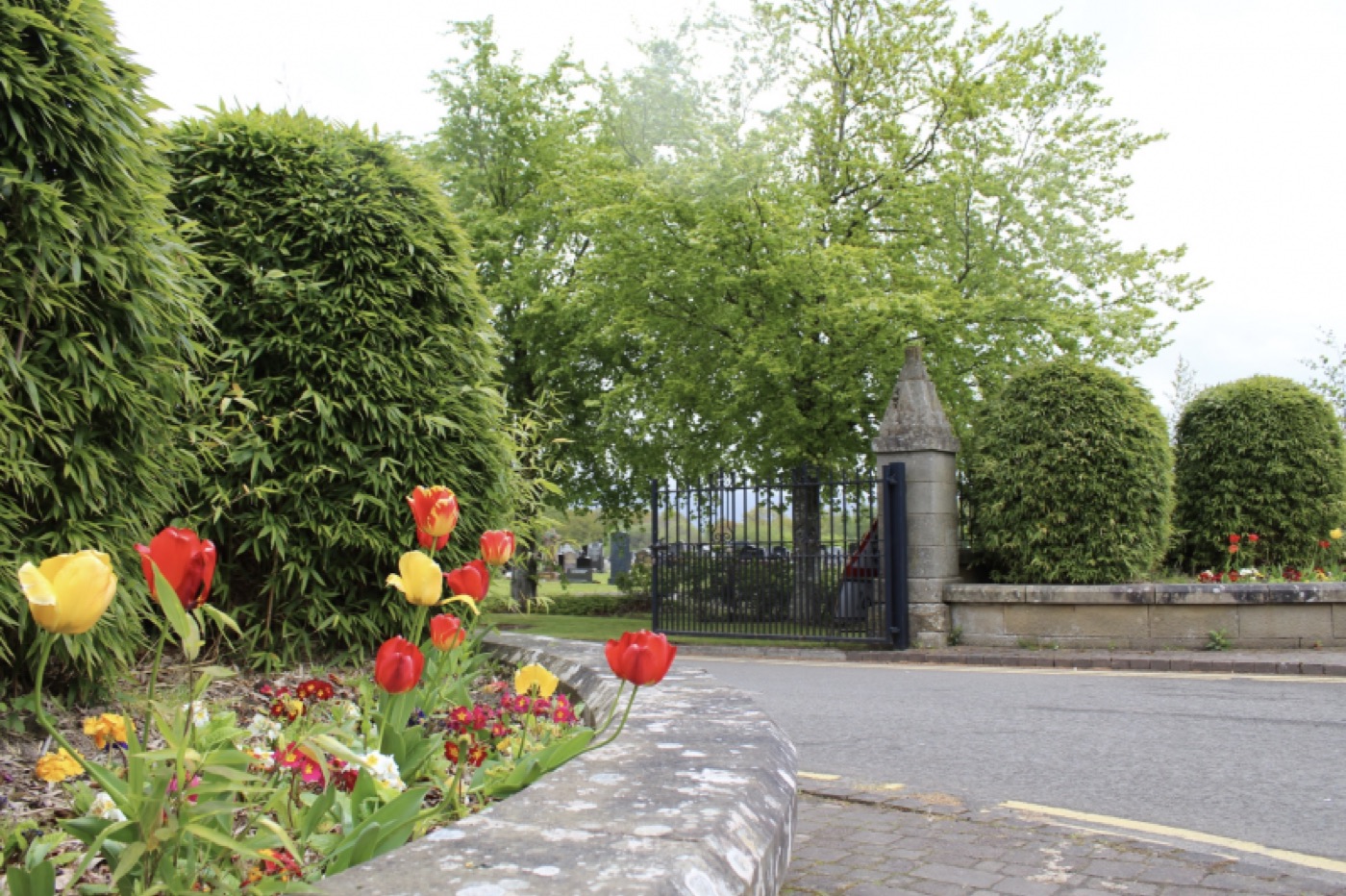
After a burial, the ground needs time to settle before a headstone can be set safely. The wait is typically several months, and commonly six months or more, though it varies with the cemetery, the council and the ground itself. We confirm the rules for your cemetery, and in the meantime there is a great deal that can be decided without any rush.
Why do you have to wait before putting up a headstone?
When a grave is filled in, the soil is loose. Over the following months it settles and compacts, and rain speeds that along. If a memorial is set before the ground has settled, the foundation can move, and a stone that was straight on the day it was fixed can begin to lean.
That matters for more than appearance. Councils across Scotland test memorials for stability, and a stone that moves may be laid flat for safety. Waiting for the ground to settle is the simplest way to make sure the memorial stands firm for many years. If this is a worry, our page on why headstones are laid flat explains how councils approach safety.
How long after a funeral can a headstone be put up?
There is no single answer that holds for every cemetery. As a general guide:
- The wait is typically several months after a burial.
- Six months or more is common, and some cemeteries or ground conditions call for longer.
- Heavy clay, wet ground or a very wet winter can all mean the ground takes longer to firm up.
- Each council sets its own rules, and these can change over time.
We check the requirements for the specific cemetery before we plan anything. If you tell us the cemetery, or just the town, we can tell you what applies. Our guide to cemetery rules around Glasgow has more on how councils handle memorials.
What goes on the grave in the meantime?
Most families have something at the grave while they wait. Often the funeral director places a simple temporary marker with the name, so the lair can be found easily. Flowers are usually welcome, although many cemeteries have rules about what can be left, particularly glass, and about items placed on lawn areas.
If you would like something more lasting in the meantime, ask us. In some cases a small marker is suitable, depending on the cemetery. We will tell you honestly whether it makes sense or whether it is better to wait for the finished headstone.
What can we do while we wait?
The waiting period is not wasted time. Everything except the fixing itself can happen during it, at whatever pace suits you.
- Visit and look. Come to the display yard and see the granites and shapes in person. There is no appointment needed and no obligation.
- Choose the stone. Colour, shape and size, within what the cemetery allows. Our guide to choosing a headstone takes you through it gently.
- Think about the words. The name and dates first, and any further lines in their own time.
- See the drawing. We set out the whole memorial in a drawing before anything is cut, and you can change it as often as you need.
- Leave the permit to us. Every new memorial needs permission from the council, and we apply for it on your behalf.
By doing this during the waiting months, the stone can be made and ready to set once the ground allows. Some families prefer to wait before even starting, and that is entirely fine too. There is no deadline.
Is it different for lawn sections?
It can be. Many cemeteries have lawn sections, where memorials stand in a row along a shared concrete foundation or beam, with grass kept clear in front. The design rules there are usually tighter, with set heights, widths and sometimes shapes.
Because the foundation in a lawn section may already be in place, the arrangements for setting a stone can differ from a traditional lair. The same principle applies, though: the council decides when a memorial can be fixed, and we confirm that before we plan the work.
What about cremated remains?
Cremation is different, because there is usually far less ground disturbance when ashes are interred. In many cases the wait is shorter, or there may be no settling period at all. It depends on where the ashes are placed:
- in an existing family lair, alongside a headstone that is already there
- in a cremation plot or garden of remembrance, where the council often sets its own style of memorial
- kept at home or scattered, where a memorial might be placed somewhere meaningful instead
Our guide to cremation memorials covers the options, including plaques, small markers and memorials for a garden.
What if there is already a family headstone on the grave?
If the person has been laid to rest in a family lair that already has a memorial, the most common wish is to add their name to the existing stone. This can often be done sooner than setting a new headstone, because the stone is already standing on its own foundation.
That said, the grave has still been opened, and the stone may have been taken down and set aside for the burial. If so, it will need to be re-erected once the ground is ready. We look at the stone, check its condition and confirm what the council requires. Our page on adding a name to an existing headstone explains the process in full.
Talk to us whenever you are ready
You do not need to have decided anything before you get in touch. Many families first call us simply to ask how long they should wait, and that is a perfectly good reason to ring. Our family has been in the memorial trade in Glasgow since 1927, and we work across the city and the surrounding areas. We will give you a straight answer for your cemetery.
Call us on 0141 762 3733, or come and see us at our display yard, 5 Crosshill Road, Bishopbriggs, G64 2PZ. No appointment is needed.
Questions families often ask
Can we order the headstone before the ground has settled?
Yes. Many families choose the stone and agree the drawing during the waiting months, so it is ready to set once the ground allows. There is no obligation to start early, though.
Who decides when the headstone can go up?
The council that runs the cemetery sets the rules. We check them for your cemetery and plan the fixing around them.
Will the funeral director leave a marker on the grave?
Often a simple temporary marker with the name is placed at the grave after the funeral. Your funeral director can tell you what they provide.
What happens if a headstone is set too early?
The ground can keep sinking under the foundation, and the stone may begin to lean. A stone that fails a council stability test may be laid flat for safety.
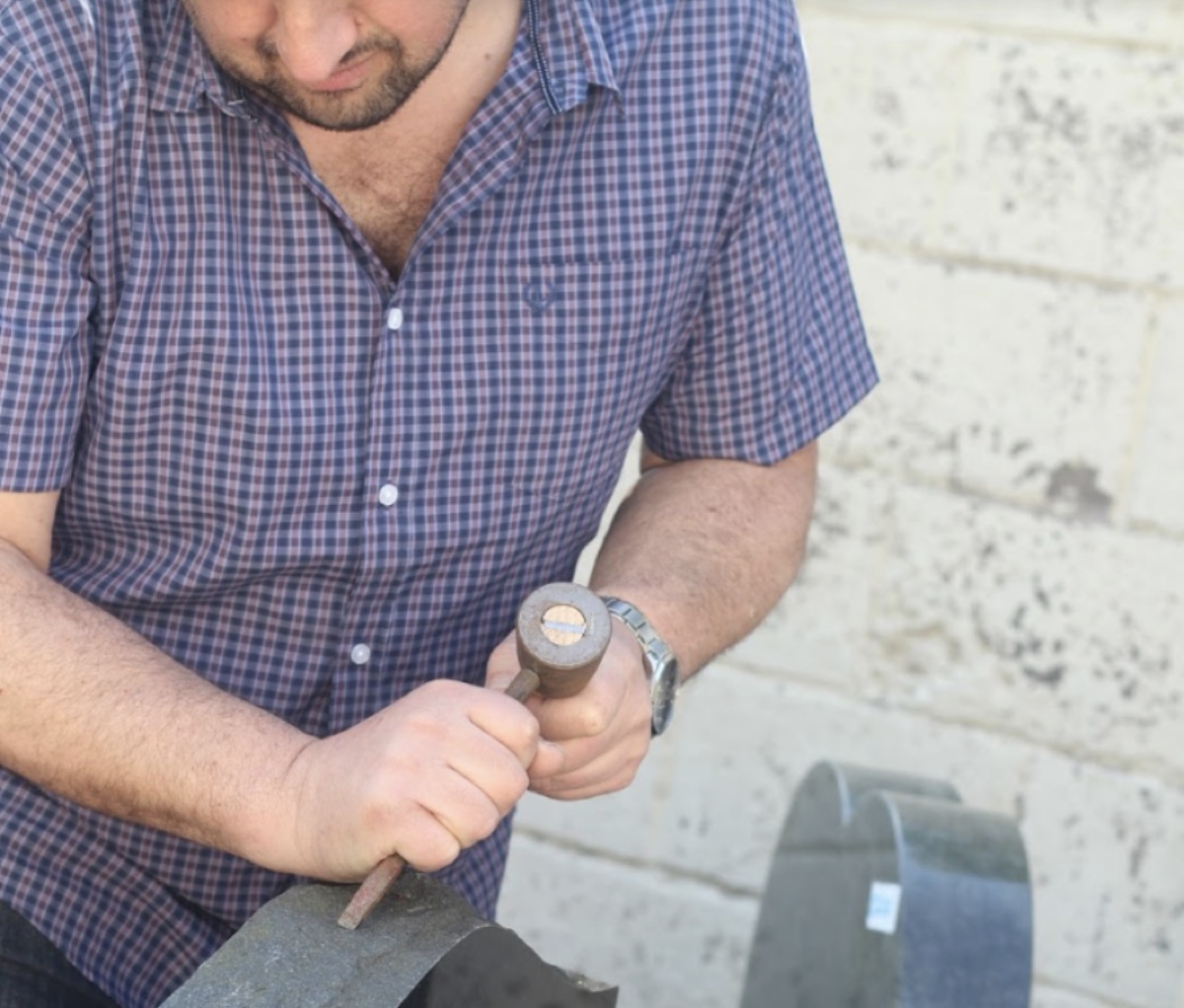
Written by Charles Lipton, third-generation memorial mason with forty years in the trade. The Lipton family has made and cared for memorials across Glasgow since 1927. Read our story.