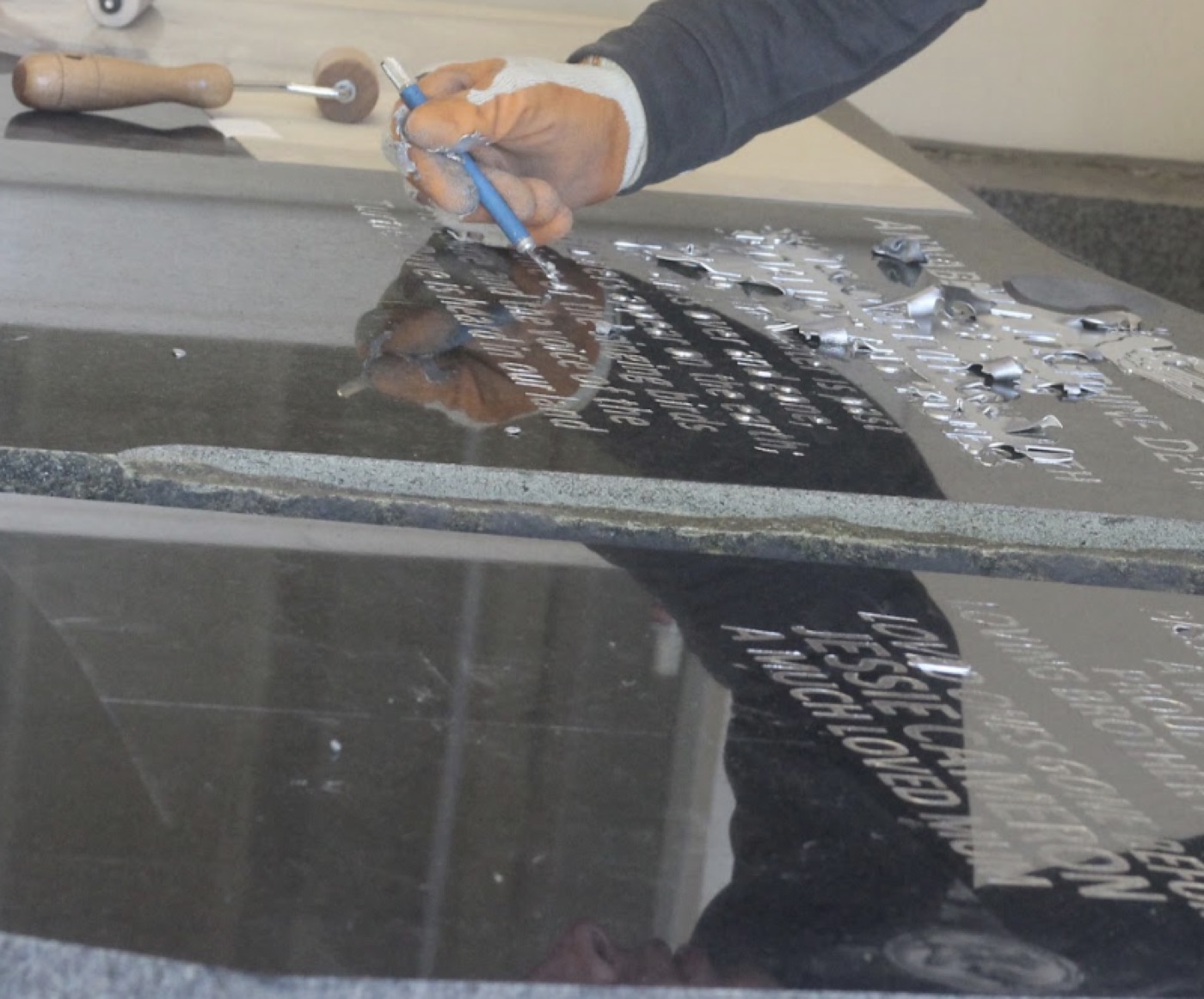
Adding a name to an existing headstone is called an additional inscription, and it is one of the most common pieces of work we do. The lair holder gives permission, we apply to the council, and the new lettering is matched as closely as possible to what is already on the stone. Depending on the stone, the work is done either at the cemetery or back at our yard.
Who needs to give permission to add a name?
In Scotland, the right to decide what happens on a lair belongs to the lair holder, the person who holds the right of burial. Their permission is needed before any inscription can be added. The council that runs the cemetery also needs to grant a permit for the work.
This can be the part families find most confusing, especially if the lair holder was the person who has died, or if the lair was bought many years ago by a grandparent. In most cases it can be sorted out. The council will explain what it needs to transfer the right of burial or confirm who may authorise the work. Our guide to lair certificates in Scotland explains what the paperwork is and what to do if it cannot be found. If nobody is quite sure where the family lair is, we can help with that too; our guide to tracing a family grave in Glasgow sets out where to start.
Once permission is in place, we apply for the permit ourselves. You do not need to deal with the council for the memorial work.
Is the inscription added at the cemetery or at the yard?
It depends on the stone, the lettering method and the conditions at the cemetery.
- At the cemetery. Some inscriptions can be cut and finished with the stone standing where it is. This avoids moving the memorial at all.
- At the yard. Often the better result comes from taking the stone down and bringing it back to our workshop, where the lettering can be cut on the bench in good light and in the dry. The stone is then returned and re-fixed.
If the stone was taken down for a recent burial, it may already be lying at the grave, and it makes sense to add the inscription before it goes back up. We look at each stone and recommend whichever approach gives the best and most lasting result, and we explain why.
Can the new lettering match the old?
In most cases, yes, very closely. Matching lettering is careful work, and it is something we take real pride in. We look at three things:
- The style of letter. The typeface, its size and its spacing, so the new name sits naturally under the one above.
- How the letters are cut. Most lettering is incised, cut into the stone in a V shape.
- How they are finished. Gilt, silver or painted lettering is common on polished granite. Many older stones have lead letters, where lead is hammered into the cut and dressed flat.
Where an original finish is hard to match exactly, often because the older lettering has weathered, we talk it through with you. Sometimes the kindest answer is to refresh the existing lettering at the same time, so the whole stone reads as one. All of our lettering is done by hand.
What if there is no space left on the stone?
This happens more often than people expect, particularly on family stones with several names already. There are usually good options:
- A plaque. A granite plaque fixed to the base, or placed on the lair, can carry the new name in matching lettering. See our plaques and vases.
- The vase. An engraved vase can carry a name and dates.
- A base tablet. Where the base or plinth has room, lettering or a tablet can be added there.
- A new memorial. Occasionally, where a stone is very worn or unsafe, families decide to replace it with a new one that carries all the names.
What is possible depends on the stone and on the council's rules for that cemetery, which we confirm before suggesting anything.
How long does an additional inscription take?
Timescales vary, so we would rather not promise a fixed number of weeks here. The main things that affect it are:
- how long the council takes to issue the permit
- whether the lair holder paperwork is straightforward or needs to be sorted out first
- whether the stone needs to come back to the yard
- the ground, if the stone was taken down for a burial and needs time before it is re-fixed
- the weather, for work done at the cemetery
When you speak to us, we will give you an honest idea for your particular stone and keep you informed as it goes along. If you are wondering about timing after a recent burial, our guide to how long to wait after a funeral may help.
Can the stone be cleaned or repaired at the same time?
Yes, and it is often a good moment to do it. When we look at a stone for an additional inscription, we also check its condition: whether it is standing firm, whether the foundation is sound, and whether the older lettering has faded.
A fresh name beside faded lettering can look uneven, so many families choose to have the stone cleaned and the existing lettering refreshed while the work is being done. If the stone is leaning or loose, it can be levelled and re-fixed so that it stands firm. Our restoration and cleaning page explains what is involved. If you would like us to look after the stone in future, ask about our service and maintenance contracts.
Talk to us about adding a name
Our family has been in the memorial trade in Glasgow since 1927, and adding a name to a family stone is work we treat with the same care as a new headstone. If you have a photograph of the stone, it helps, but it is not needed to start the conversation.
Call us on 0141 762 3733, or visit our display yard at 5 Crosshill Road, Bishopbriggs, G64 2PZ. No appointment is needed.
Questions families often ask
What if the lair holder has died?
The right of burial can usually be transferred to a family member. The council will explain what it needs, and we can guide you through it.
Can you add a name to a very old headstone?
Often, yes. We check the stone's condition first, and older lettering can be refreshed at the same time so the new name sits well beside it.
Do I need a photograph of the headstone?
It helps us give you an idea of what is possible, but it is not essential. We can look at the stone at the cemetery.
Is the stone safe to move for an inscription?
We assess each stone before deciding whether to work on it at the cemetery or take it to the yard. If a stone needs to be re-fixed, we set it on a sound foundation.
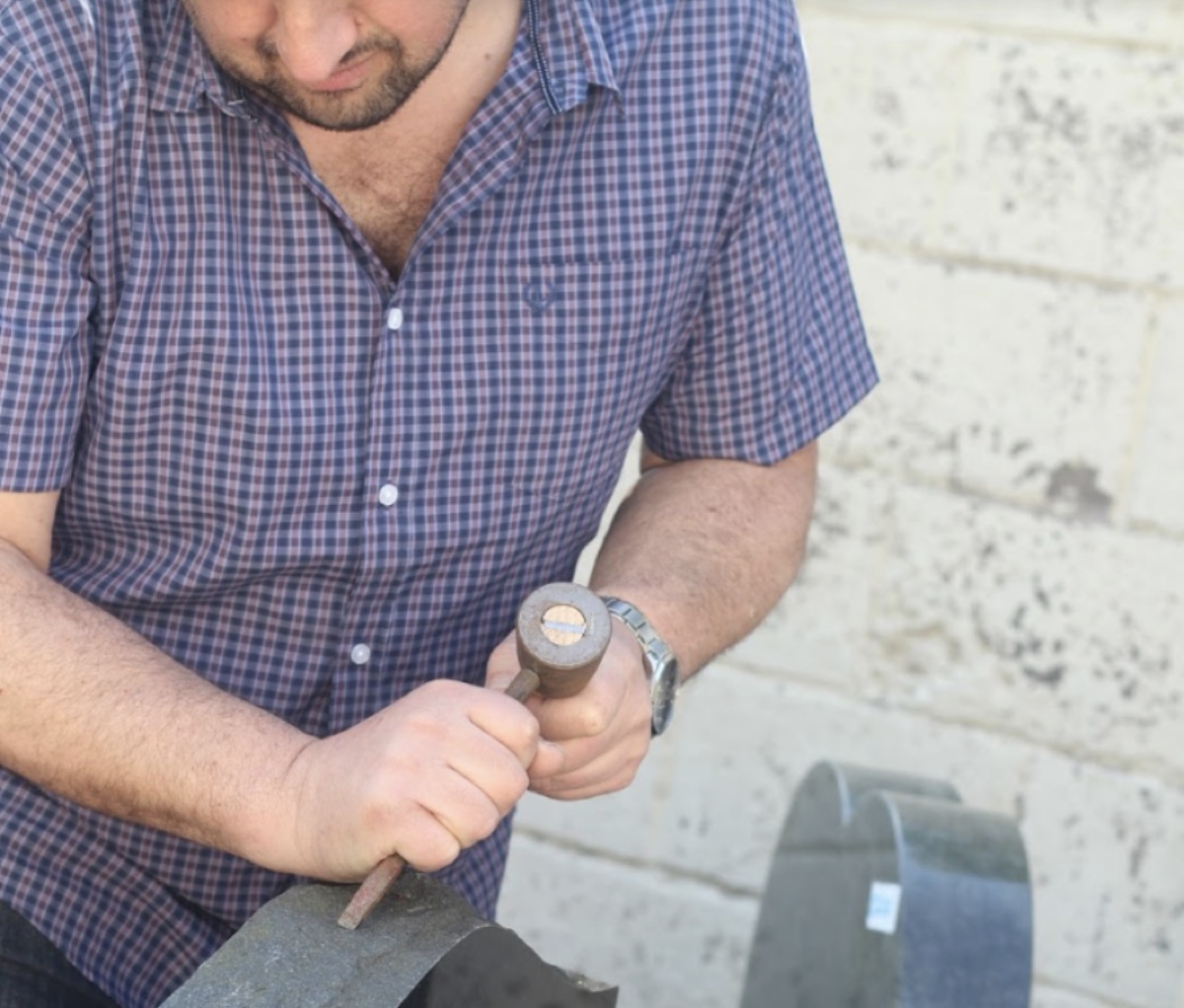
Written by Charles Lipton, third-generation memorial mason with forty years in the trade. The Lipton family has made and cared for memorials across Glasgow since 1927. Read our story.